How much does it cost to raise chickens?
By Hannah Prescott · · 5 min readWhat do you have to buy before the first egg?
A coop, a run or a fenced yard, a feeder, a waterer, bedding, and the birds. Then about six months of patience: "hens begin laying at around six months of age", notes UMN Extension.
The coop is the only line with a big spread, so start there. For up to six hens, the coops we compare cost:
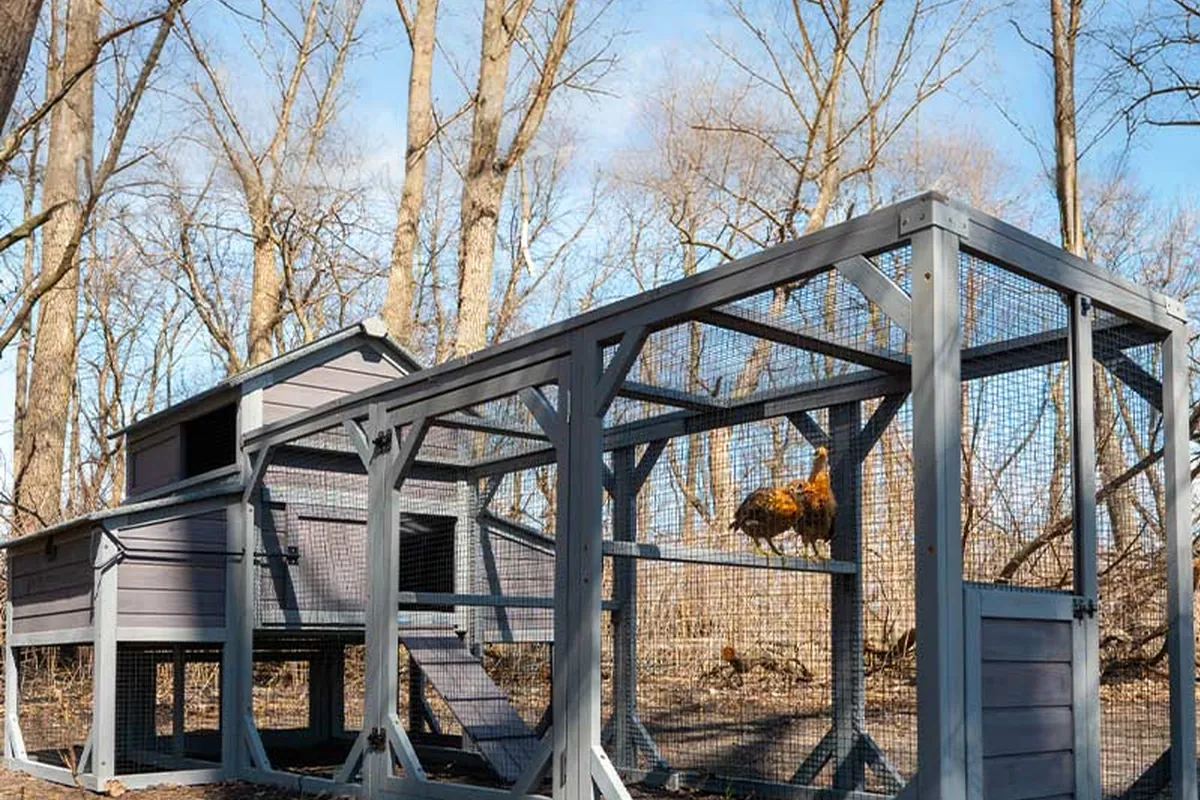
- Aivituvin AIR46: $459.99, run included, in wood
- Omlet Eglu Go Up: $639, or $879 with its 6 ft run (3 hens)
- Nestera Large Lodge: $789, no run
- Omlet Eglu Cube: $1,119, or $1,359 with its 6 ft run
All four were read on the brands' own US stores on November 14, 2026. The Omlet prices were Black Friday prices that day; the regular ones are higher. For bigger flocks the range runs to $6,599: see the full ranking.
What does the coop price leave out?
Usually the run, sometimes the lock, often the small parts. A few examples from the pages we read:
- Omlet: the run is +$240 (6 ft) or +$360 (9 ft) on the Cube and the Go Up; wheels and weather covers are options
- Nestera: droppings trays $39 to $79, a wheel set $89, an automatic door opener $179, and no run for the Lodge on the US store
- OverEZ: wire panels from $299.99, an 8 ft wooden run $1,899
- Roost & Root and Carolina Coops: freight, calculated at checkout or quoted
- Aivituvin: the anti-dig wire floor is $59.99 (sold out the day we checked)
Add an automatic door if you won't always be home at dusk: $119.99 for the ChickenGuard All in One, the best of the four we compare, up to $183 for Omlet's Wi-Fi door. And price a return before you need one: OverEZ keeps 5%, Carolina Coops 20%, and Nestera only takes back a coop that hasn't been assembled.
How much feed does a hen eat?
This is the number that decides your running cost. UMN Extension: "A 6-pound hen will eat roughly 3 pounds of feed each week." The University of Georgia is blunter: "Feed is the greatest cost when raising chickens" (UGA, backyard flock guide).
So do the multiplication for your flock. Three hens: about 9 lb a week. Six hens: about 18 lb a week, or some 940 lb a year. Ten hens: about 30 lb a week. UMN adds that consumption may rise in winter, when hens burn more calories, and fall in summer heat.
We don't print a feed price because we haven't read one on an official page, and it varies by store and by region. Take the price of a bag at your feed store, divide by its weight, and multiply by the pounds above. UMN also lists two small extras for layers: crushed oyster shell and grit. Kitchen scraps can trim the bill a little, says UGA, as long as the hens finish them within 10 to 20 minutes and still eat a balanced ration.
Video: "HOW MUCH DO BACKYARD CHICKENS COST? | Suburban Poultry Price Breakdown | Homestead Laying Hens Care", Oak Abode on YouTube. Not made by us; chosen because it shows the product or the topic clearly.
What else comes back every month?
Bedding and water, mostly. For bedding UGA recommends "a good, absorbent litter material such as pine shavings, rice hulls, peanut shells or ground corncobs". How much you use depends on the coop: a plastic coop with a tray takes a thin layer, while the deep-bedding method UMN describes starts at about 4 inches and builds to 10 inches by winter.
Water costs little but can't run out. UGA's figure: "twenty hens can drink about 1 gallon of water each day in cool weather", and far more in heat. In a freezing winter you'll want a heated waterer, and UMN suggests keeping a second one in reserve.
If you raise chicks, there's a starter phase: UGA says to expect at least 4 lb of starter feed per bird, then a grower ration from 6 to 18 weeks, then layer feed. And keep a little aside for the unplanned: a vet visit, a new latch after a raccoon's first try.
How many eggs do you get back?
UMN's figure is "roughly six eggs each week" per hen in production. Six hens in their prime would give about three dozen a week. That's the good scenario, and it doesn't last all year or for every year of a hen's life.
Laying drops each fall when hens molt and as daylight shortens; they need 12 to 14 hours of light a day to keep laying, according to the same page. Production peaks in the first two years, though a hen can go on for five to ten.
So should you expect cheap eggs? Honestly, not in the first year: the coop alone has to be spread over a lot of dozens. People keep hens for the eggs they know, the compost and the company. Size the budget for that, and you won't be disappointed.
Where can you save without regretting it?
On size, if you're honest about your flock. Three hens don't need a ten-hen coop; the Go Up or the Aivituvin will do, and our cheap chicken coop ranking lists four under $1,000. Just check the floor area against the 3 sq ft per hen rule in how big a chicken coop should be.
On timing, sometimes. Omlet's prices were 20% off for Black Friday on the day we checked, and Roost & Root showed an offer ending November 17. We can't know what follows; the price on the brand's page is the one that counts.
Not on security. A coop that loses its flock is the most expensive one you can buy. If the budget is tight, spend it on a lock, hardware cloth and a door that shuts at dusk before anything decorative.
The products in this guide, side by side
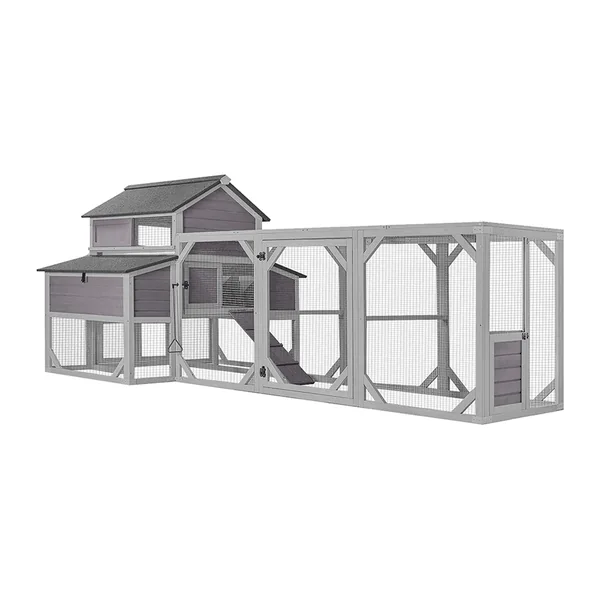
| Product | ||||
|---|---|---|---|---|
| Hens, says the brand | 8 hens | 3 hens | 5 hens | 6 hens |
| Hens at 3 sq ft each | House size not published | 2 hens | 3 hens | 3 hens |
| Material | Wood | Plastic | Plastic | Plastic |
| Run | Included, 41 sq ft | Not included | Not included | Not included |
| Predator protection published | Locking latches, welded mesh | Locking latches, raised house | Raised house | Locking latches, raised house |
| Cleaning | Pull-out tray | Tray, hose-clean plastic | Tray, hose-clean plastic | Tray, hose-clean plastic |
| Warranty | Not stated | 2-year | 25-year | 10-year |
| Where to buy | Check price at Aivituvin | Check price at Omlet | Check price at Nestera | Check price at Omlet |
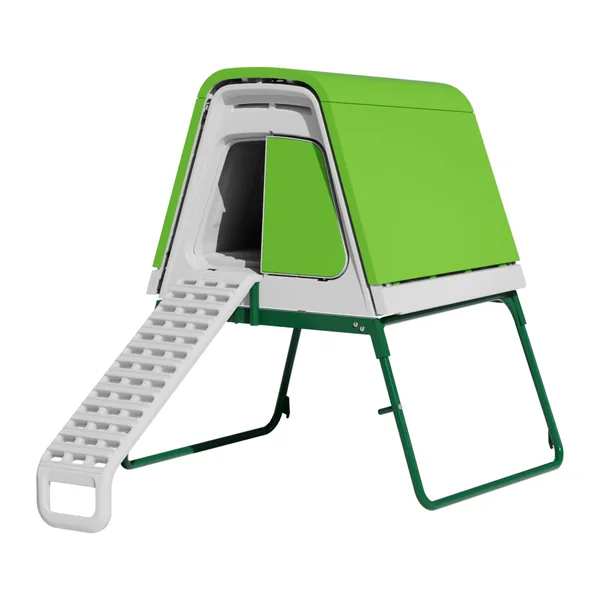
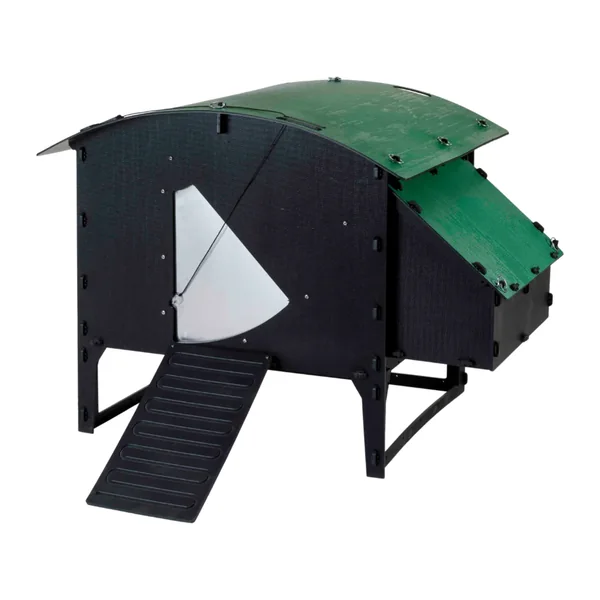
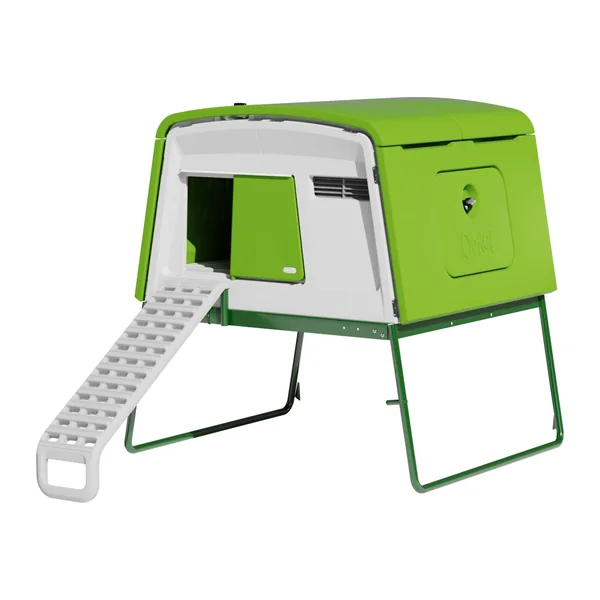
✓ marks the best figure of the row. Prices checked November 14, 2026 on each brand's own US store.
This guide helps you choose and budget a coop; it isn't legal or veterinary advice. City codes, county rules and HOA covenants decide whether you can keep hens and where a coop may sit: check yours before you order. For flock health questions, ask a vet or your state Extension office.